Increasing Friction
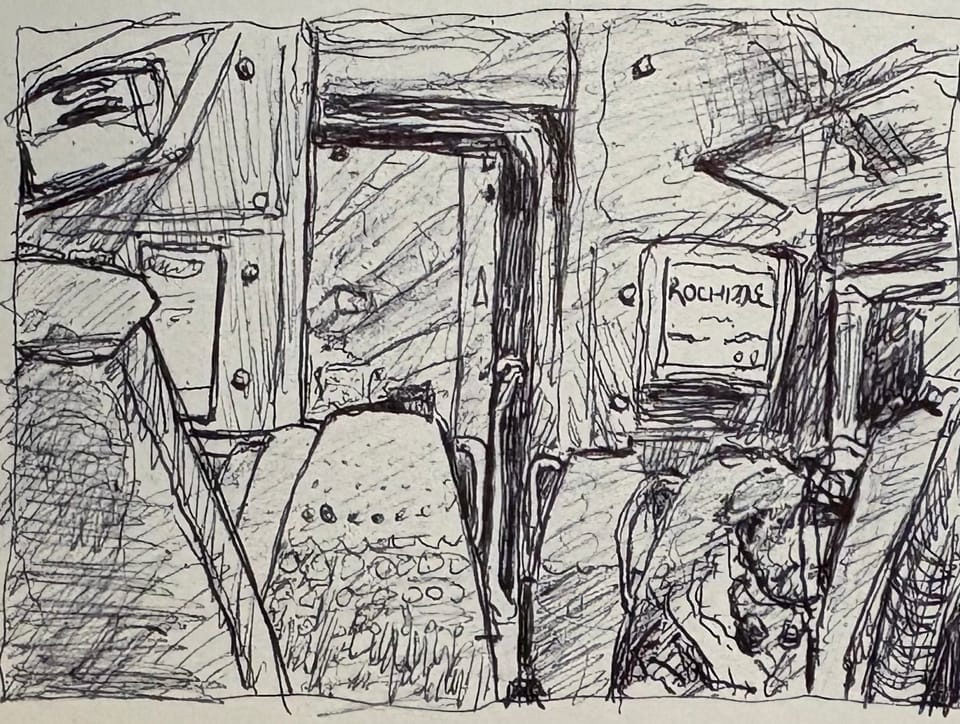
One of the lessons I've learned over and over again is that not all process friction is bad. While the lesson does run counter-intuitively to some of the instincts I've developed over the years as a software developer, another valuable lesson has been that gut feelings are not absolute truth.
In fact, friction can be valuable. Useful.
In the mornings, I make my coffee and I sit down. I turn off my music, opening my pocket notebook to the next blank page and writing the date out in a neon gel pen. With the same pen I write out a list. The same items every day, each a general area I want to make sure I focus on for some part of the day. I refer to the same list from the day before, modifying the order of the items so any that weren't done yesterday are at the front of the list today. I swap to a biro and write in longhand or draw for 30 minutes, keeping my pen moving as much as possible.
This process has multiple points of friction. If I wanted to reduce friction as much as possible, make the process efficient, there are many places that I could trim.
I could avoid referencing yesterdays list, keep the same order and have a fixed list that I refer to or memorise to avoid page flipping.
Why even hand write? I'm a faster typist, and I could search for each day's note quickly and easily. I wouldn't have to worry about spelling things badly either, as computers can do that for me.
I could skip longhand, and use a shorthand or develop my own set of abbreviations. I could really pack a lot of writing into that same 30 minutes then, very efficient.
I've explored each of these points before, experimenting with changes to address perceived problems. But my state of mind - and the inputs to that mind - are important to the process, and they impact what writing comes out of the session too. This process is a ritual, and rituals are a way to develop a certain mind-state consistently. Taking the time to do these things by hand and in a way that doesn't prioritise efficiency alters my thinking. My writing feeds back into me, and I have time to consider. I can process my thoughts, I can understand. My thinking becomes more diffuse. I let go. I unclench.
I handwrite whenever I'm struggling to understand. When I need to come to a conclusion and I can't. When I need to think clearly about anything. When I need to slow down. This blog post was drafted in handwriting - as were many of the others. The friction helps.
One last reason for adding this kind of friction - creating room for serendipity. I don't fully remember where I first heard about making room for serendipity in as many places as possible, but it could have been Austin Kleon. Either way, I'm a full convert. I think about it a lot. Here, the serendipity can get into the space made by slowing down, and by having a physical notebook I need to physically flip through to find something. Who knows what I'll spot on the way?